


Company
How we work.
Six steps, one team. From the first conversation to a system that keeps running, and keeps changing with you.
01 — Listen
Listen

We start with the people who do the work, not just the people who commission it. In short conversations at their desks we learn what they do all day, what slows them down and what they quietly work around.
No slides and no requirements template. Just the work as it really is, in their words.
You get: A shared understanding of the problem, written down.
02 — Map
Map
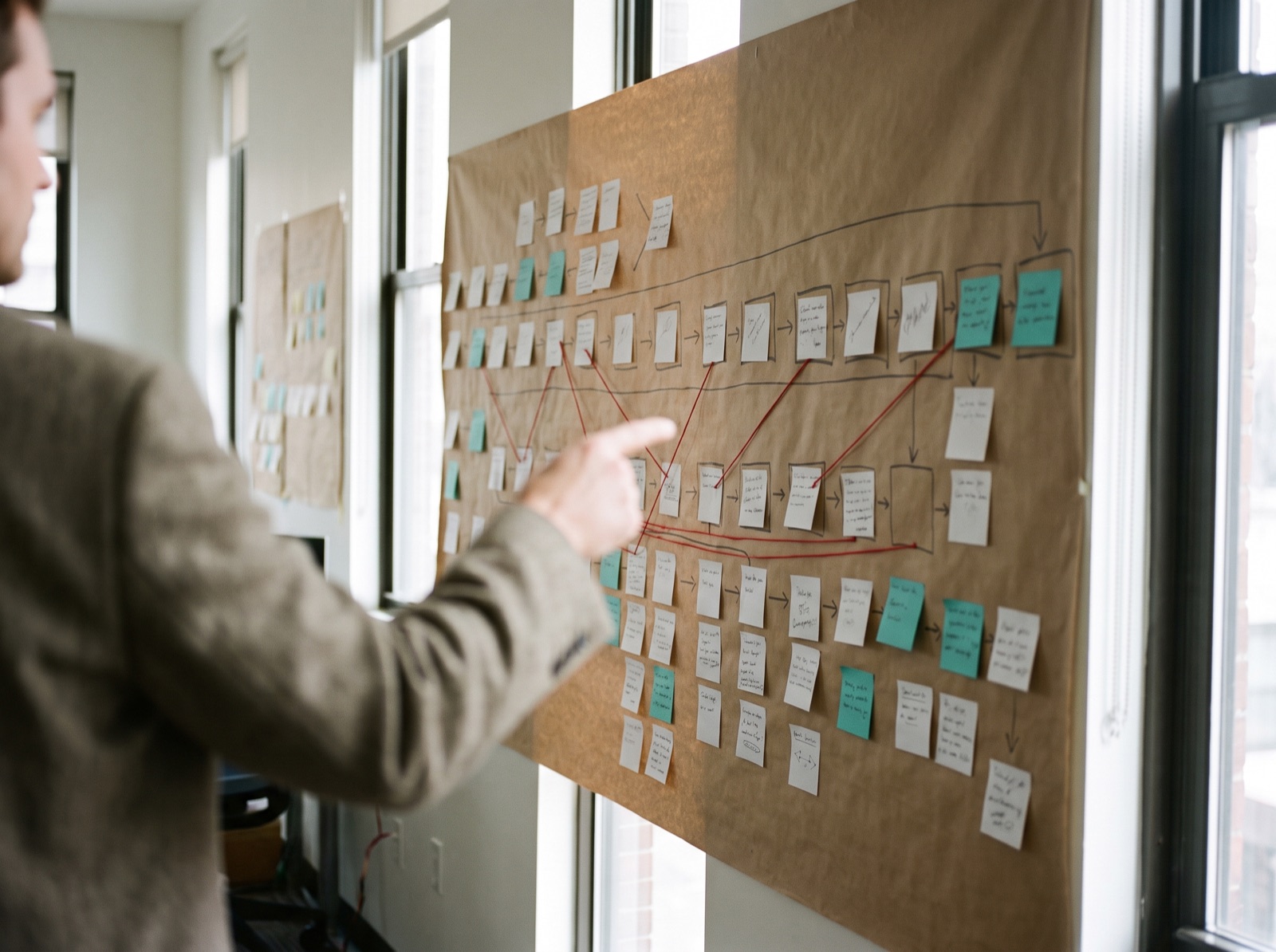
Then we draw it: every step, every hand-off, every spreadsheet and every “temporary” fix that became permanent. The map shows where the time goes, where software will help and where it would only get in the way.
Most clients see their own process on one page for the first time here.
You get: A process map you can argue with.
03 — Plan
Plan

From the map comes a written plan: scope, architecture, phases and cost, with the trade-offs spelled out. It says what we will build first and why.
The plan is yours to keep, whether or not you hire us to build it.
You get: A plan in plain language, with a price.
04 — Build
Build
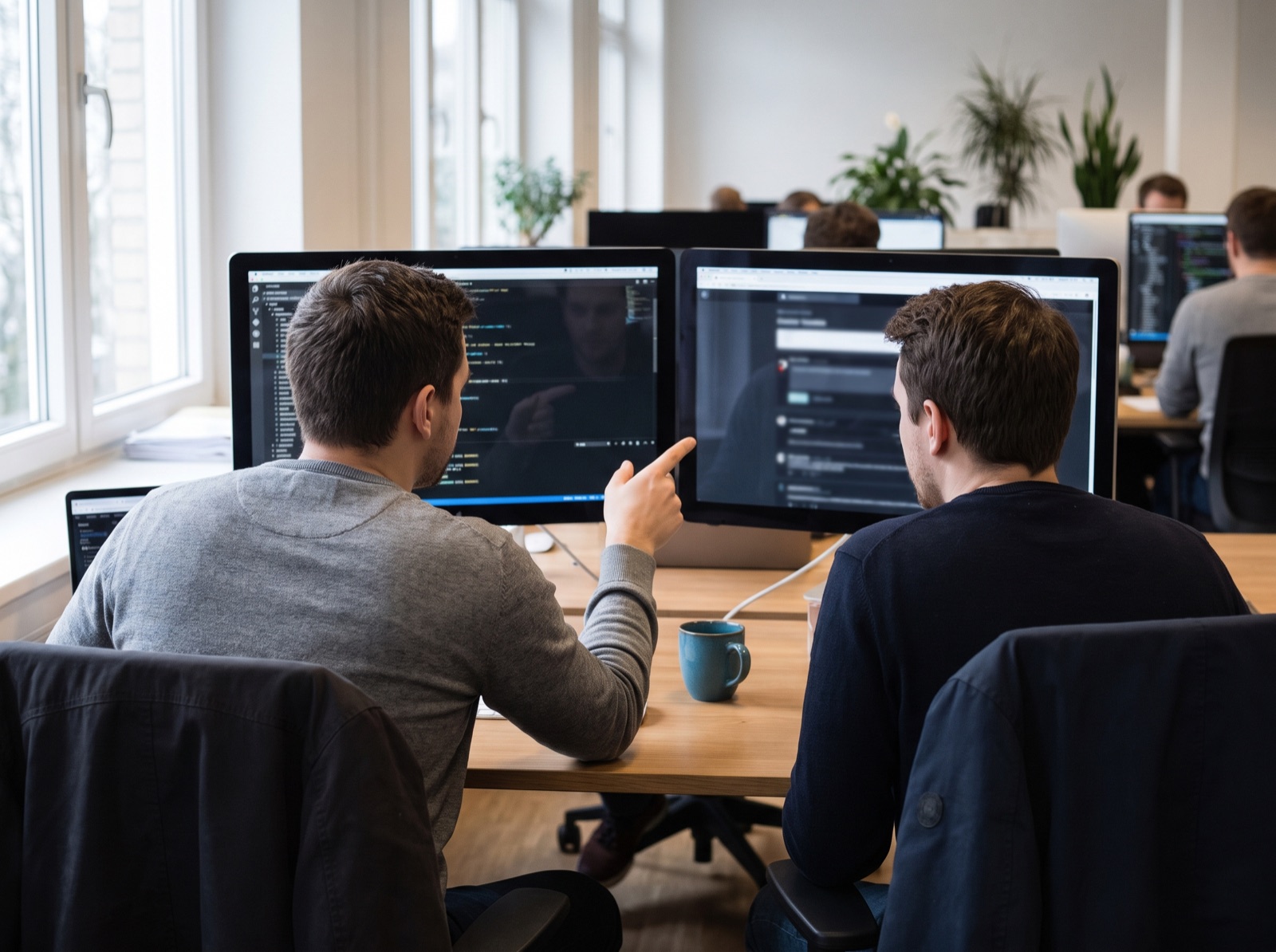
A small senior team builds in weekly cycles. From the first week there is working software in your own repository, and every week there is more of it. You use it, you react, we adjust.
No black boxes and no big reveal: the people you met are the people building, and the documentation is written as we go.
You get: Working software every week, in your repository.
05 — Launch
Launch

Launch is a phase, not a date. Data is migrated and checked, people are trained on the real system, and the documentation is finished alongside the last features.
The switch happens when your team is ready, with us in the room.
You get: A system your team already knows how to run.
06 — Run
Run
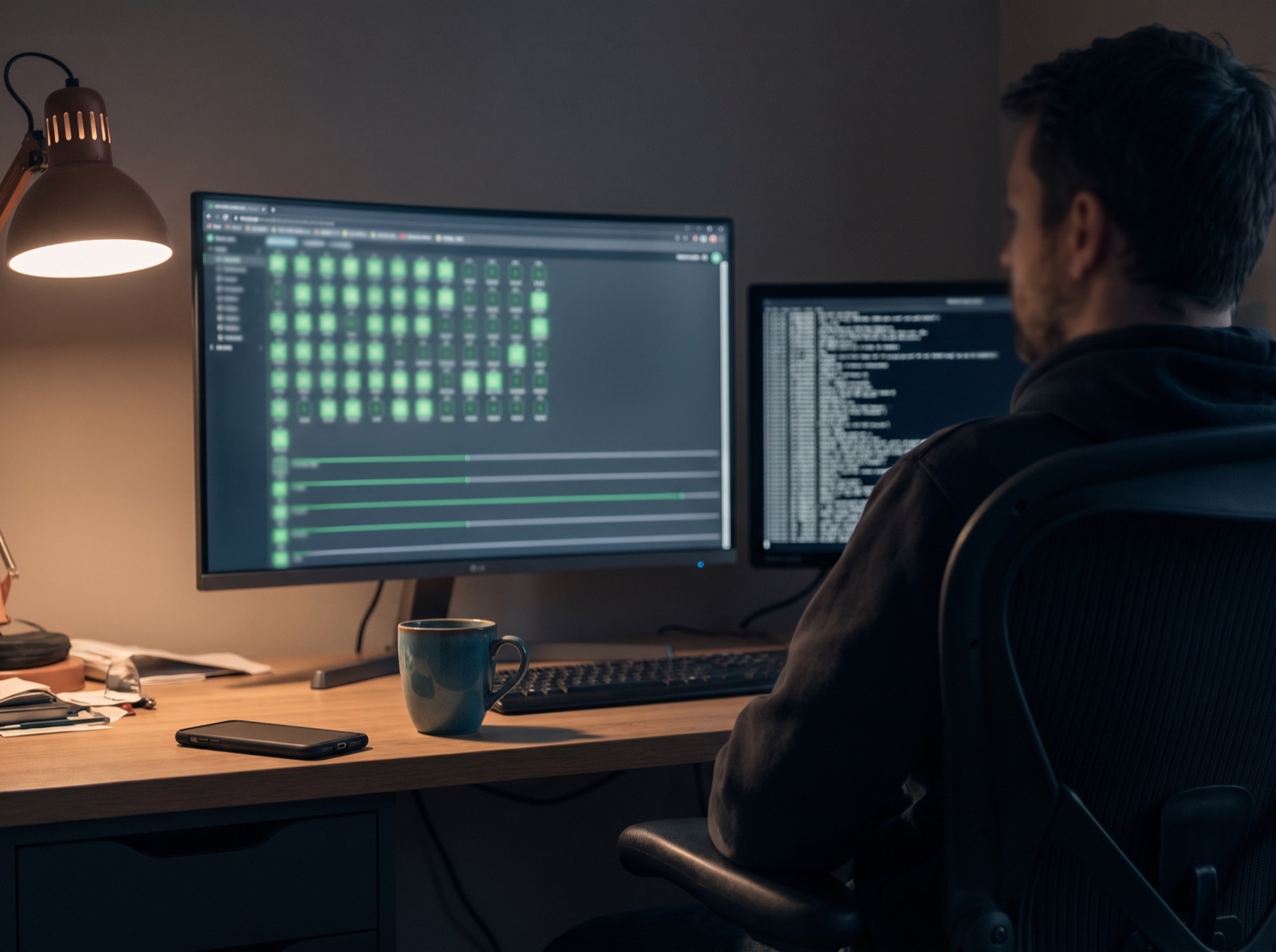
We stay. The system runs on cloud or on your own servers, with monitoring, backups and support in place from day one.
Organisations change and their software should change with them. We keep evolving the system as your needs do, with the same team.
You get: A team you can call, and a system that keeps up.
What you get
- Working software every week
- Your code, in your repository
- Documentation written alongside the system
- A team you can call